

Public Status Pages
This is your typical status page where you can publicly display any ongoing incidents, scheduled maintenance and general system uptime for any given component to all of your users.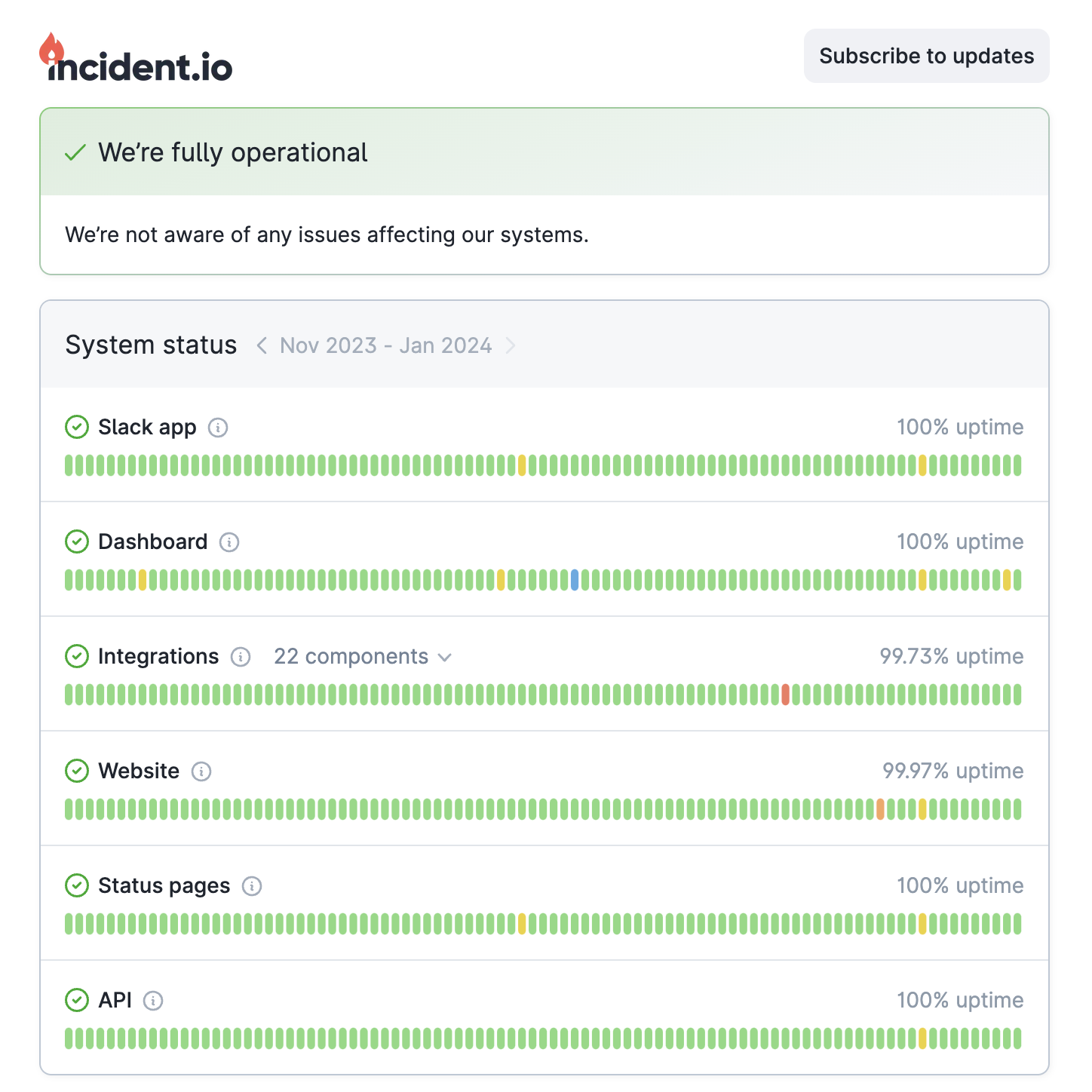
Get started here.
Public Status Pages with Sub-Pages
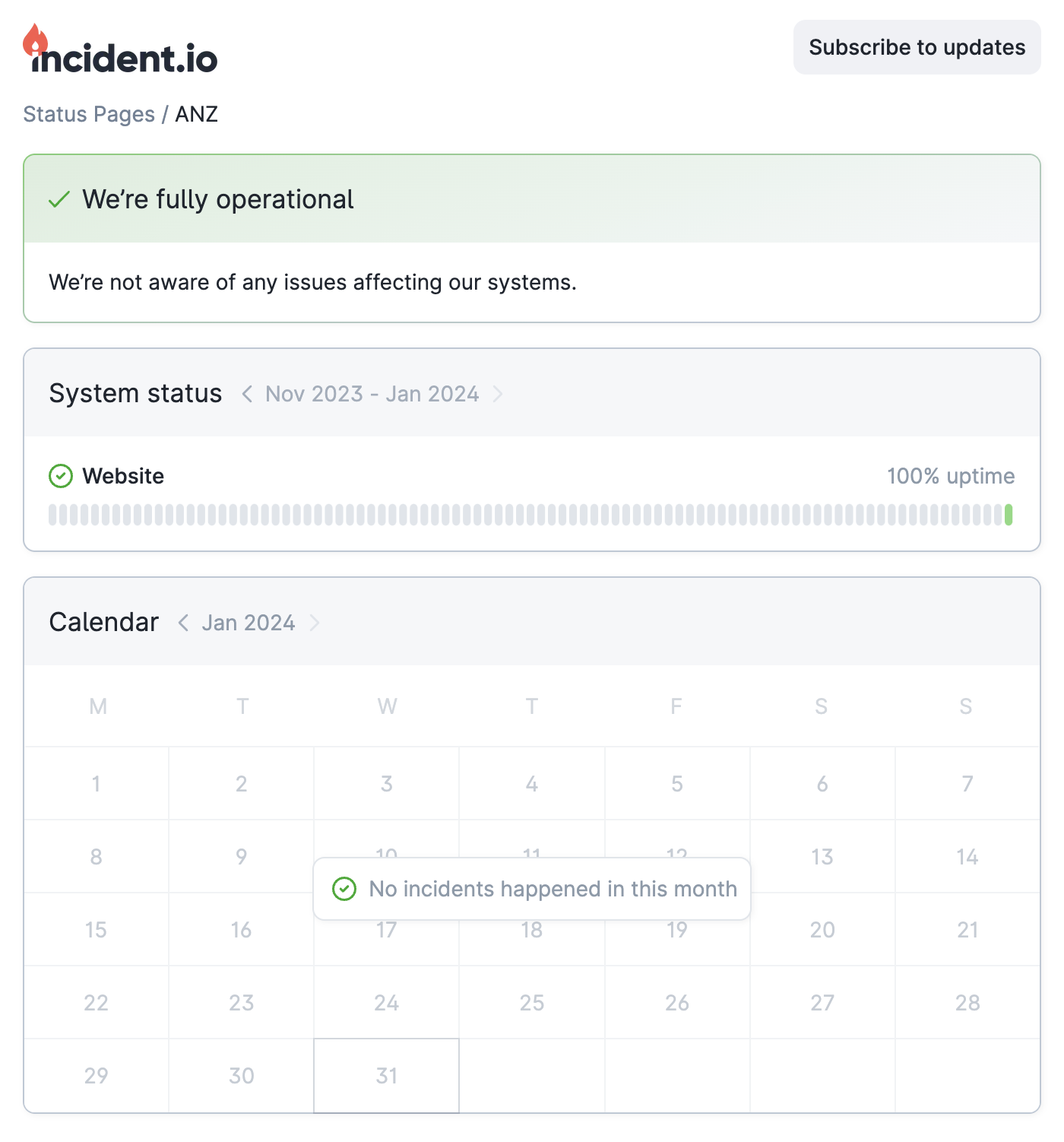
Sub-pages are useful if you have users that need a more specific view of the health of all of the different services, systems, products, or regions that you offer/operate within. For example, if you have a product offering with multiple products and the users of those products are independent from each other, you may want a sub-page per product. Another example is that you have a regional separation in your company, and you would like a status page for each of those regions.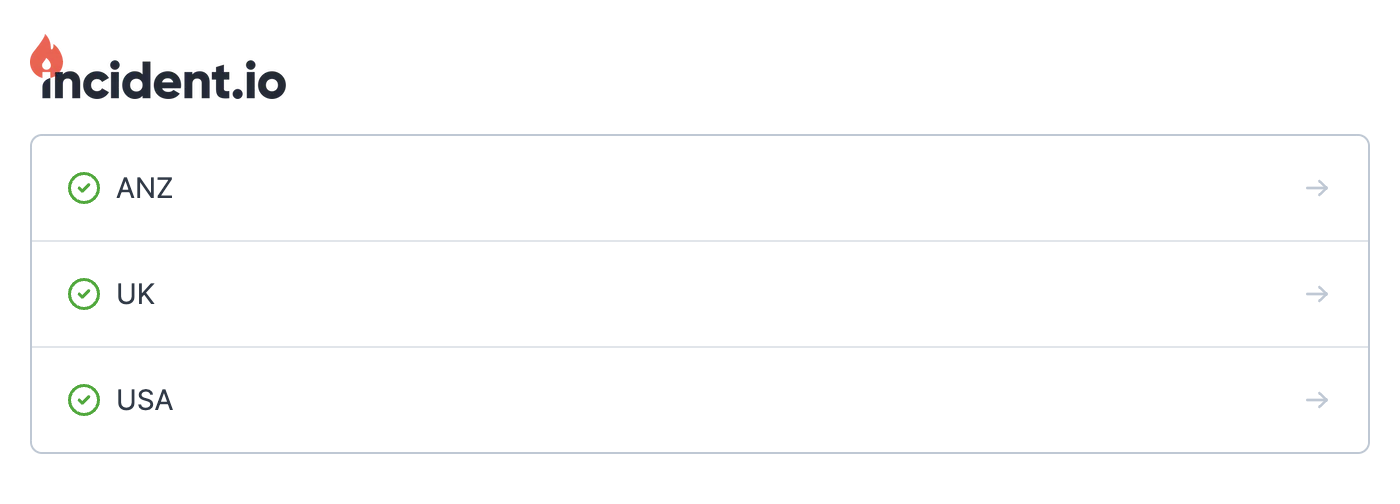
Get started here.
Customer Status Pages
Customer pages give you the ability to provide your customers with a dedicated, authenticated status page, managed centrally. Customer pages are managed like our sub-pages, but add a layer of authentication onto each page to limit access to a specific customer. You may want to use customer pages if only a subset of customers are impacted by an incident. For example, if you run dedicated infrastructure for customers, or maintain components for a small set of high-value customers, you can use customer pages to give those customers a dedicated space, that always shows them when their experience of your product is experiencing issues.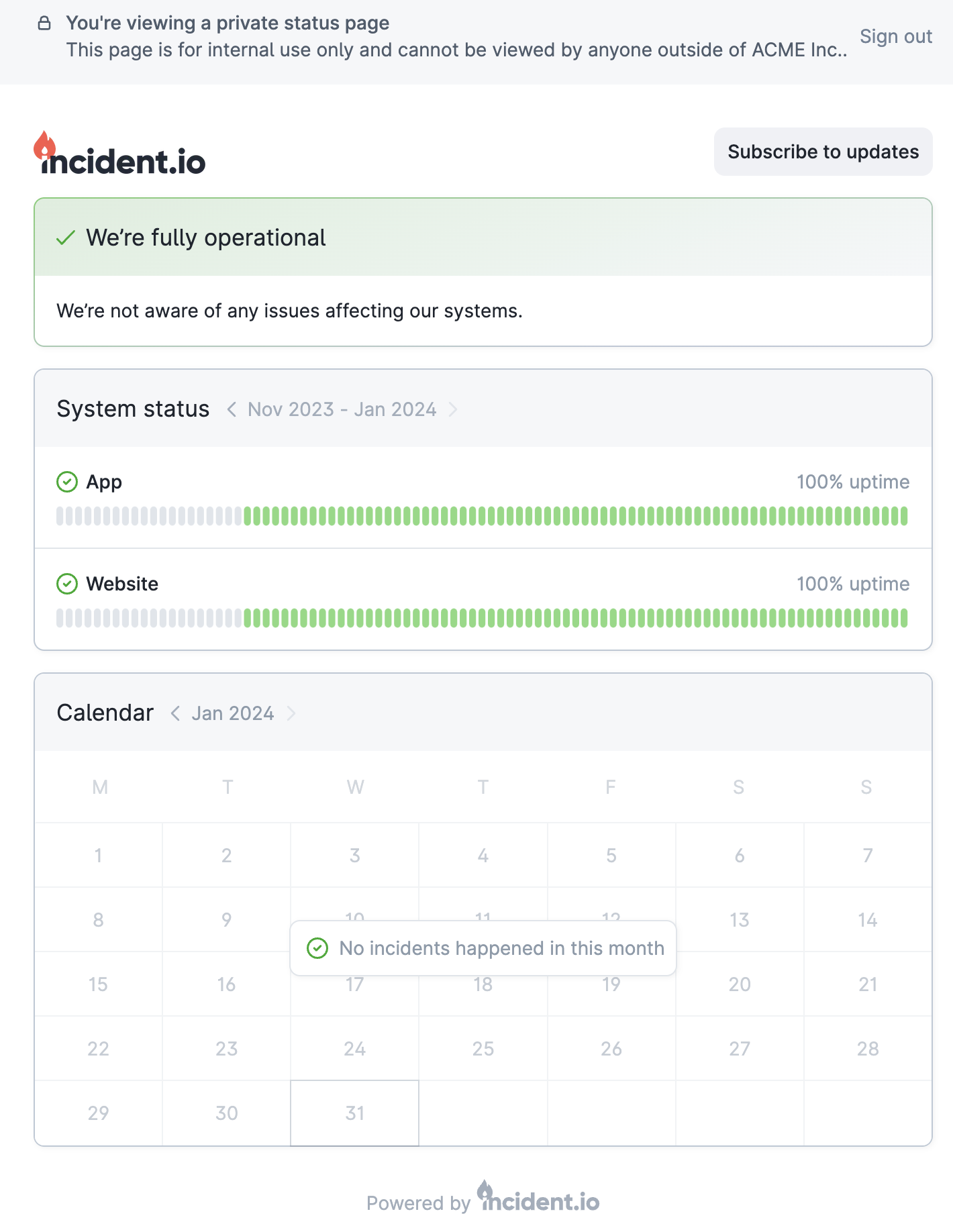
Get started here.
Internal Status Pages
Designed for internal use, this page keeps all stakeholders within your organization informed about ongoing incidents. It’s an effective tool for communicating the status of the entire product suite or specific system components to various teams within the organization.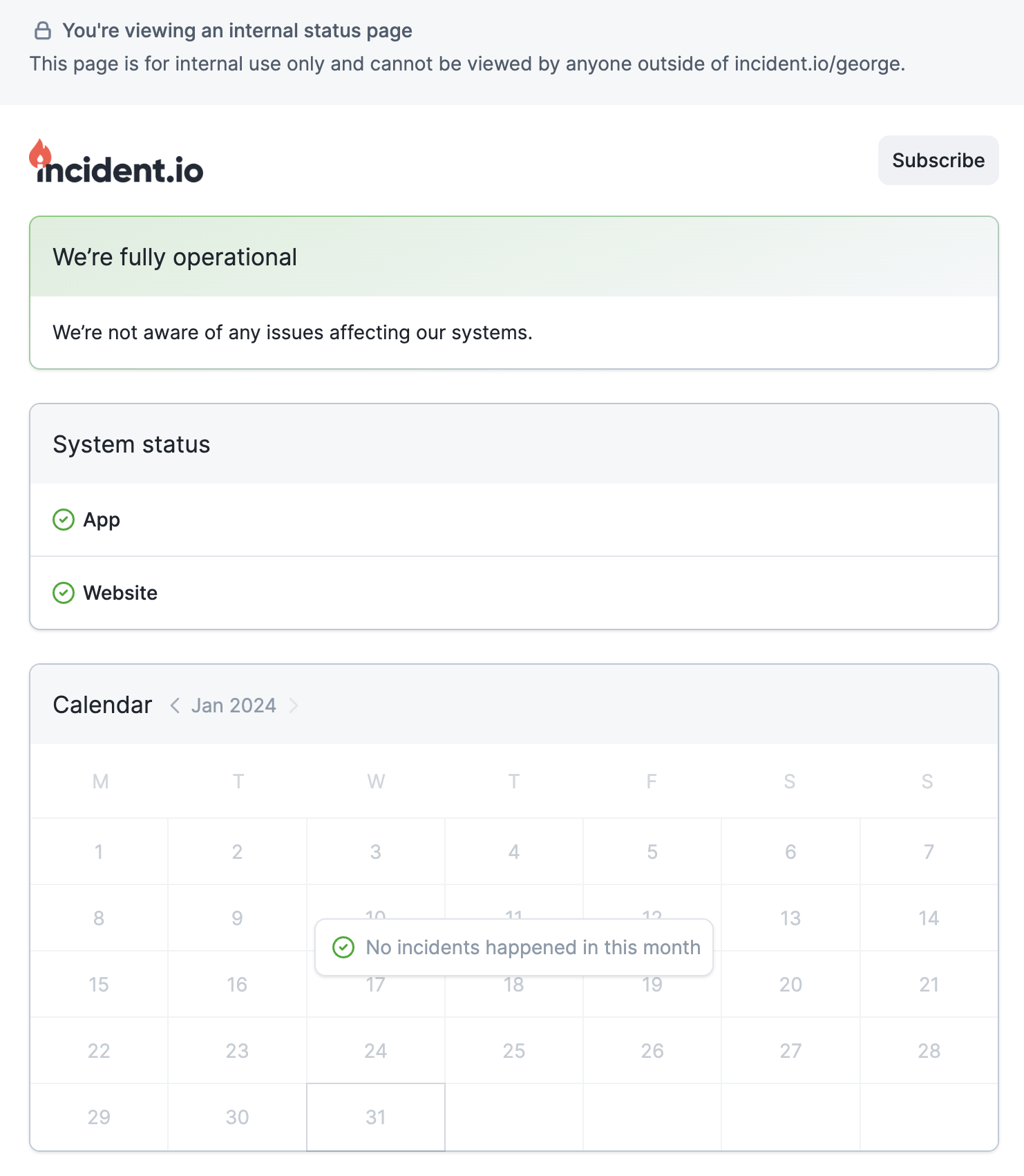
Get started here.