Not sure what sub-pages are? Read our FAQ.
Using sub-pages makes it possible to only share incidents on a status page where it’s relevant – if an incident only impacts a system/component used by your customers in North America, you don’t want that incident to show up for customers in Europe. To get started, head over to Status pages hit Create a new status page > Public status page > Create with sub-pages.

1. Basic details

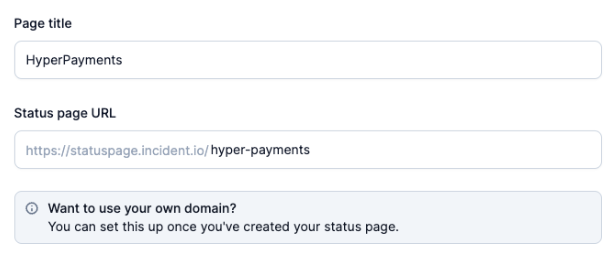
The first decision you have to make is what you’ll call your status page. Page title and Status page URL fields, filled in for HyperPayments This name will be used as the page heading for both your parent and sub-pages, so we recommend using something sensible, like your company name. Note: you don’t need to write “status” or “status page” at the end of your page title - we’ll take care of that for you.
2. Sub-pages (Catalog)

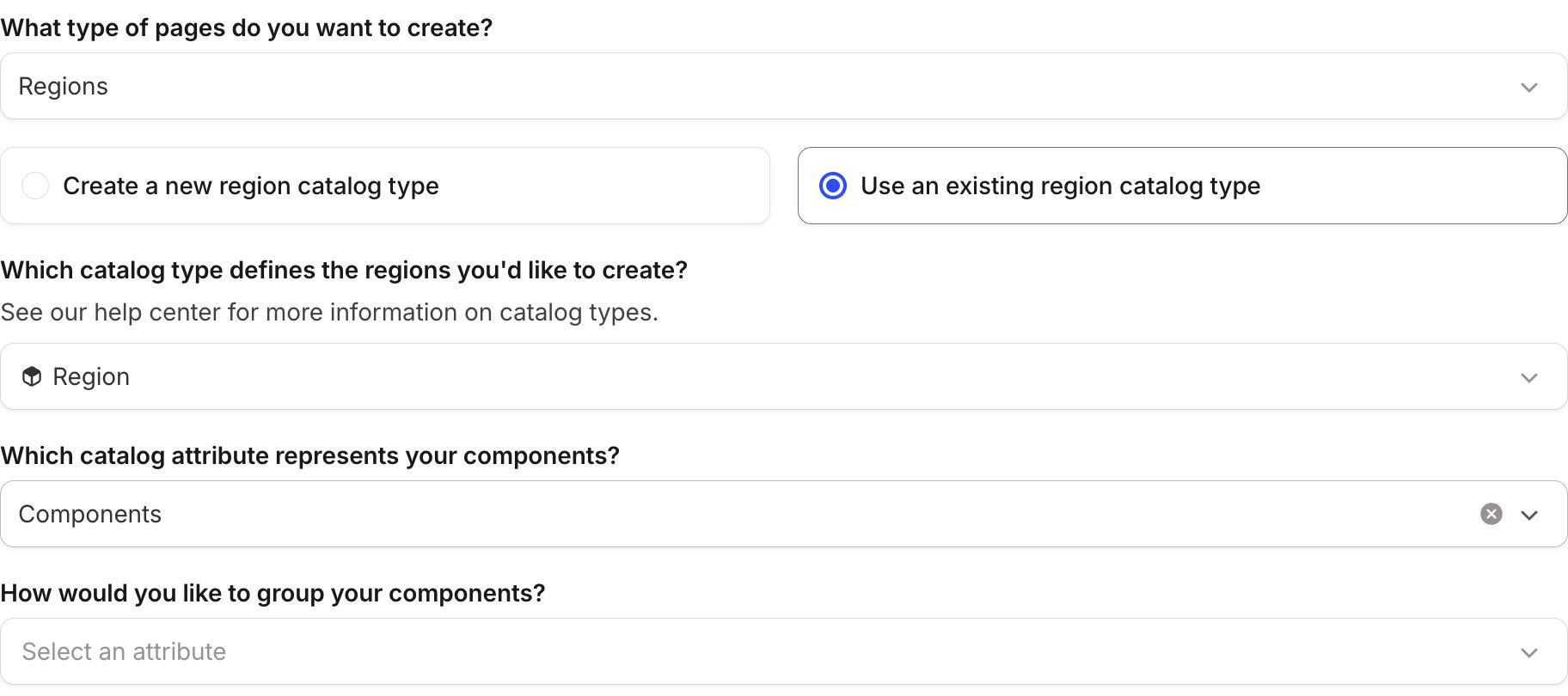
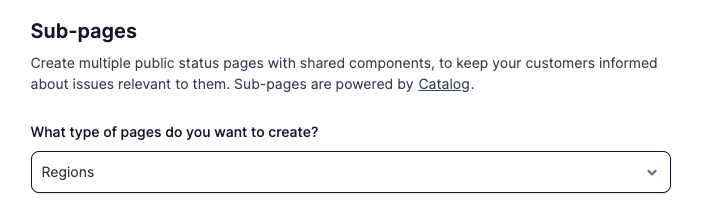
Sub-pages are powered by Catalog. This means that most of what you build whilst configuring your sub-pages can be leveraged in other features, like Workflows. The first decision in this section is to choose what your sub-pages represent. This is often Regions that you operate in, or Products that you sell. It could be anything you want though! The Sub-pages step with "What type of pages do you want to create?" set to Regions As you’ve already learnt, sub-pages are powered by Catalog. Once you’ve decided on the type of pages you want, there are two options to choose from:
  1. Create a new catalog type
  2. Use an existing catalog type

Catalog Option 1 (default): Create a new catalog type

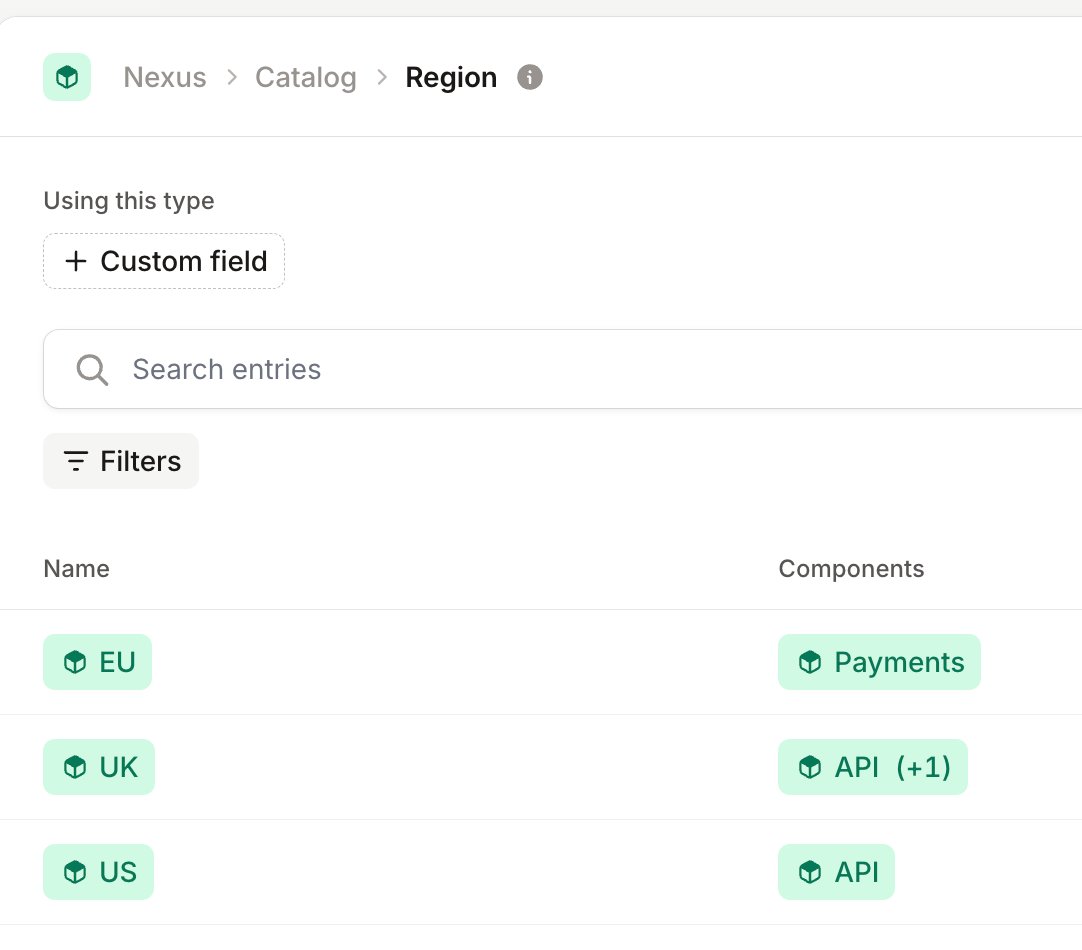
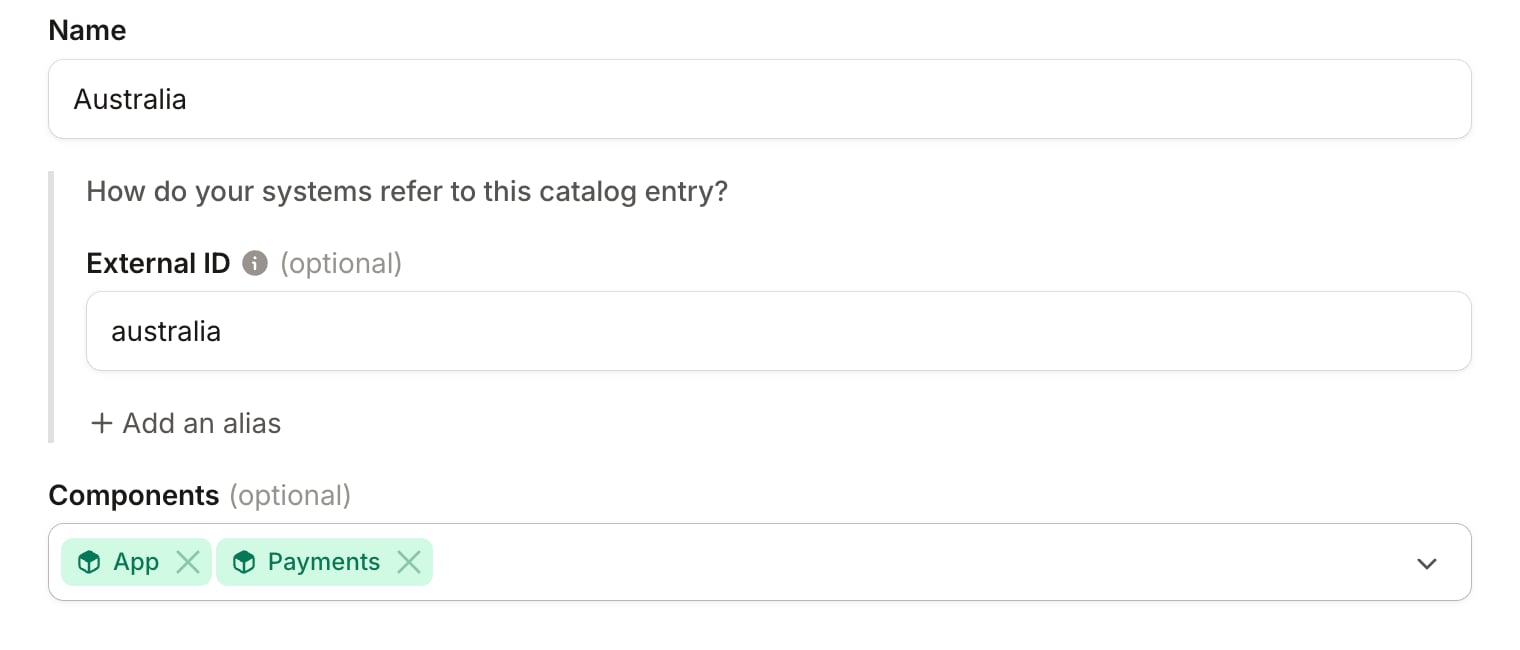
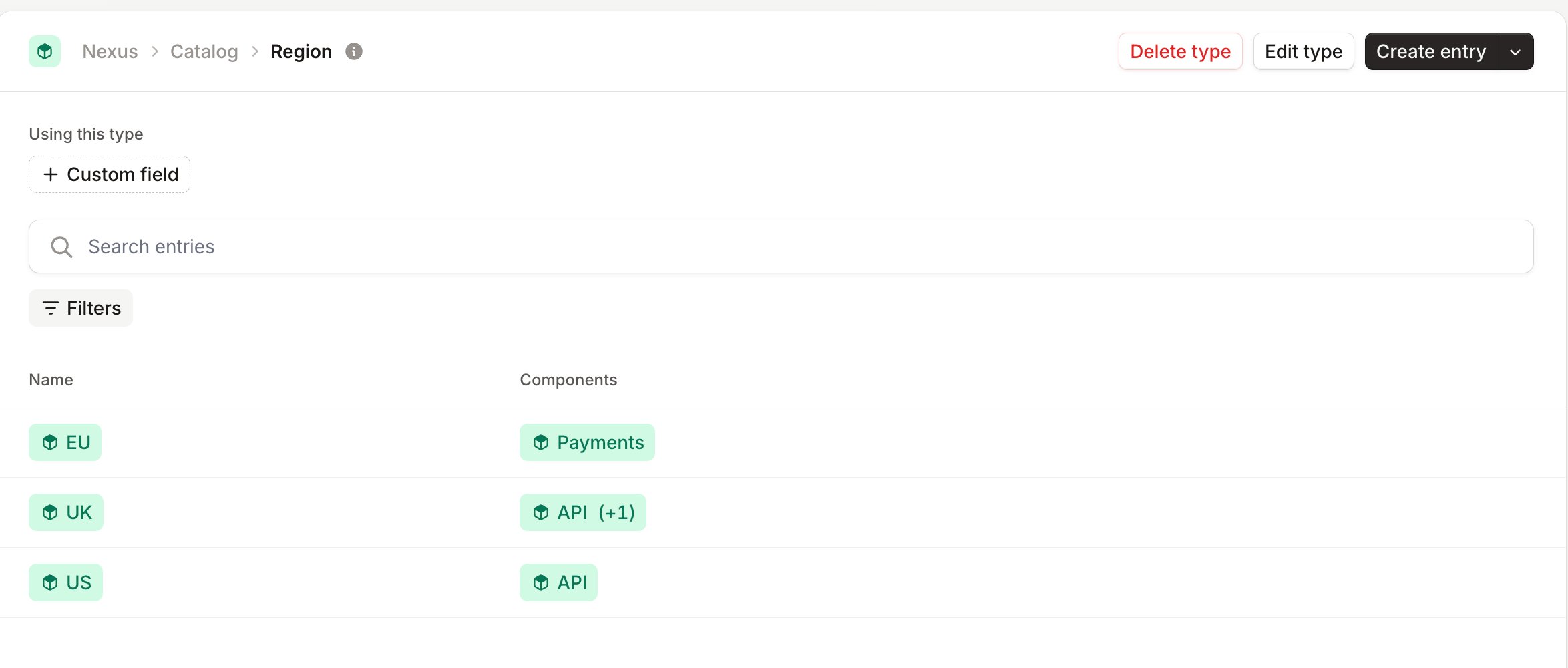
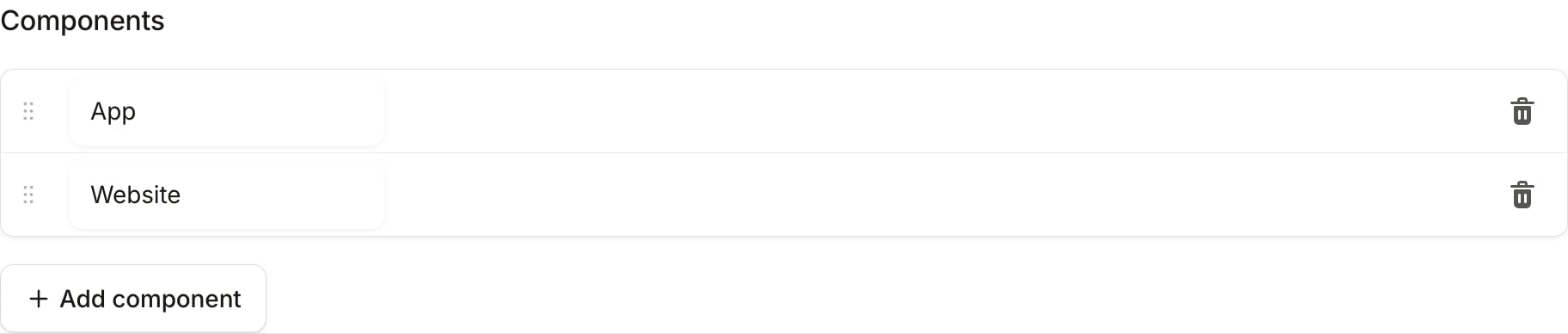
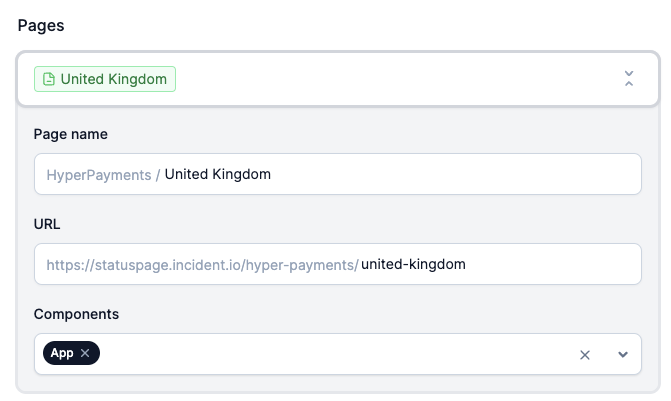
Under Components, you should enter all of the different systems, services, components, or features that you want to map to some (or all) of your sub-pages. Components list containing App and Website, with an Add component button Now we can create some pages. Here we’ve mapped the App component to the UK region: Pages step showing the United Kingdom sub-page with its page name, URL and the App component After you’ve created your sub-page, these new catalog types will show up in your Catalog as Region and Components. The Region catalog type in Catalog, listing EU, UK and US with their components If you want to add more Regions, feel free to do so from the Catalog UI. Head over to the Region catalog type, hit “Create entry” and choose the relevant components. Create entry form for a new Region named Australia, with App and Payments components
Catalog Option 2: Use existing catalog types

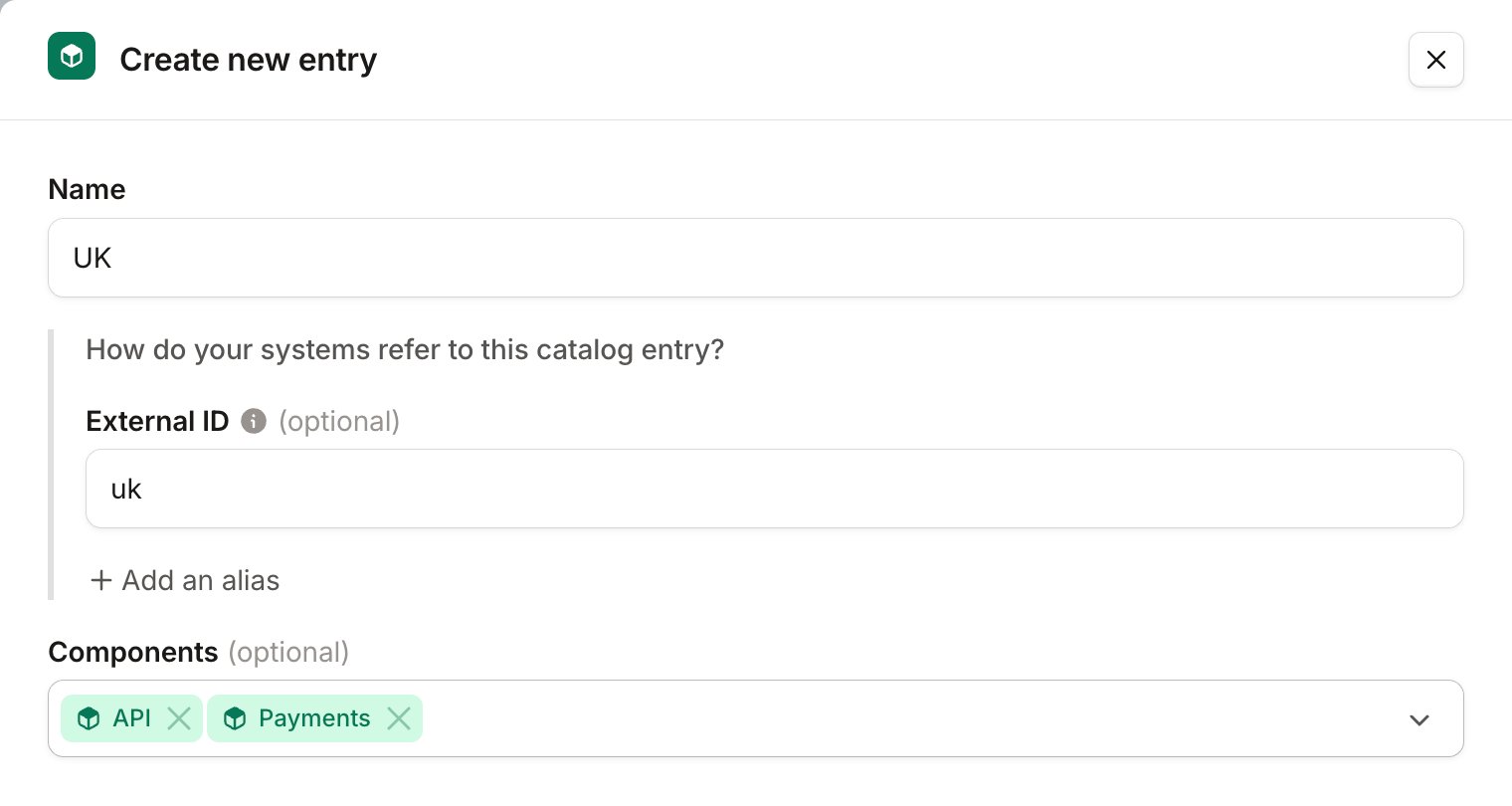
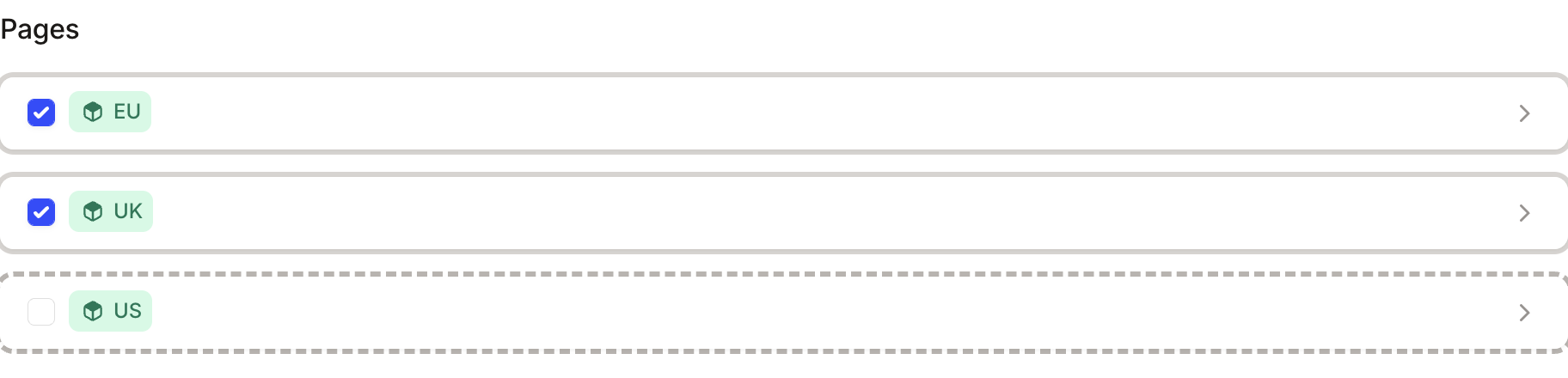
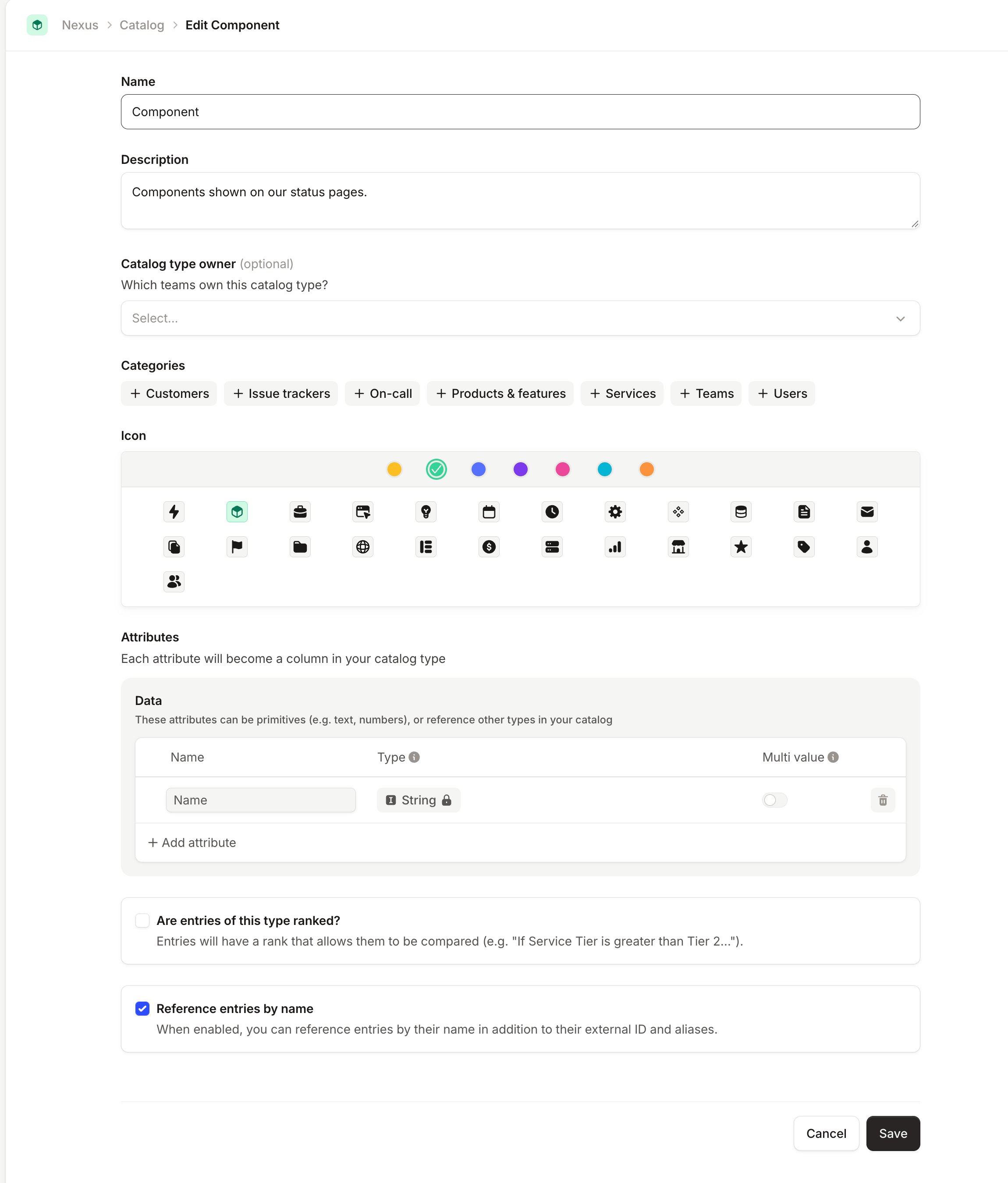
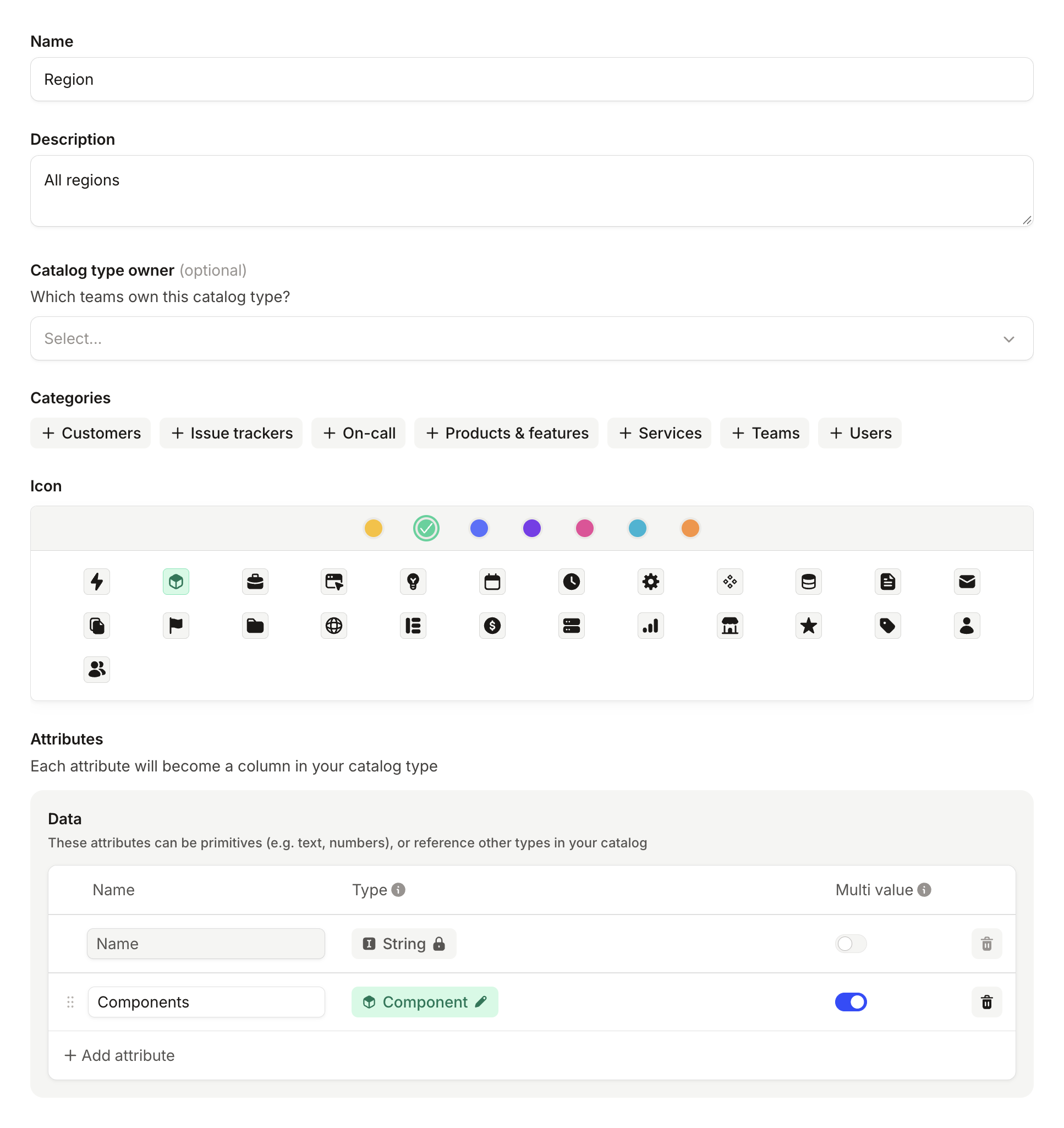
For sub-pages, you’ll need two catalog types: one for your sub-pages (e.g. Regions), and one for your components (e.g. Components, Features, or Feature Areas). If you’ve already imported catalog types from an external system like Backstage, Cortex, or OpsLevel, or you’ve just manually created them independently of sub-pages - you can just reuse those in your setup of sub-pages! If not, you may need to either Create a new catalog type or adjust your existing catalog types. At a minimum, your Component catalog type should look like this: Edit Component catalog type, with a single Name attribute of type String Feel free to add any additional attributes that better describe the Component, e.g. the Owning Team, a Description, and so on. And your Region catalog type should look something like this: Region catalog type with a Components attribute of type Component and Multi value turned on It’s very important that the Region catalog type has an attribute with Resource Type = Component as this is what we’ll use to route status page updates to the correct page. Ensure that “Multi value” is selected for the Components attribute as this will allow you to associate multiple components to each Region. For example, the UK might rely on both the API and Website components. Now that you have a “sub-page compatible” Region and Component catalog type, we need to ensure that each Region has a number of Components mapped to it. An entry for the Region catalog type should look something like this: Create new entry drawer for the UK region, with API and Payments selected as Components The result will look something like this: Region catalog type entry list showing EU, UK and US, each with mapped components You can now complete the sub-page setup wizard with compatible catalog types. Sub-page wizard set to "Use an existing region catalog type", with Region and Components chosen You may optionally configure grouping of your components as well. This can be useful if you have a large number of components and want to group them on each of the sub-pages, and will show up as expandable groups on each sub-page’s system status. You can choose to create/not create some pages. If you don’t create them during setup, you can always enable them later in the sub-page settings. Pages step with EU and UK ticked and US left unticked In this example, we have Regions to represent our different pages, and Components to represent our components. In your organization, you might use Products instead of Regions, and Features instead of Components. We support any version that works for you!
Component Ordering

2 options for the ordering of components:
  • Alphabetically
  • Ranked
more info in this article.

3. Page setup

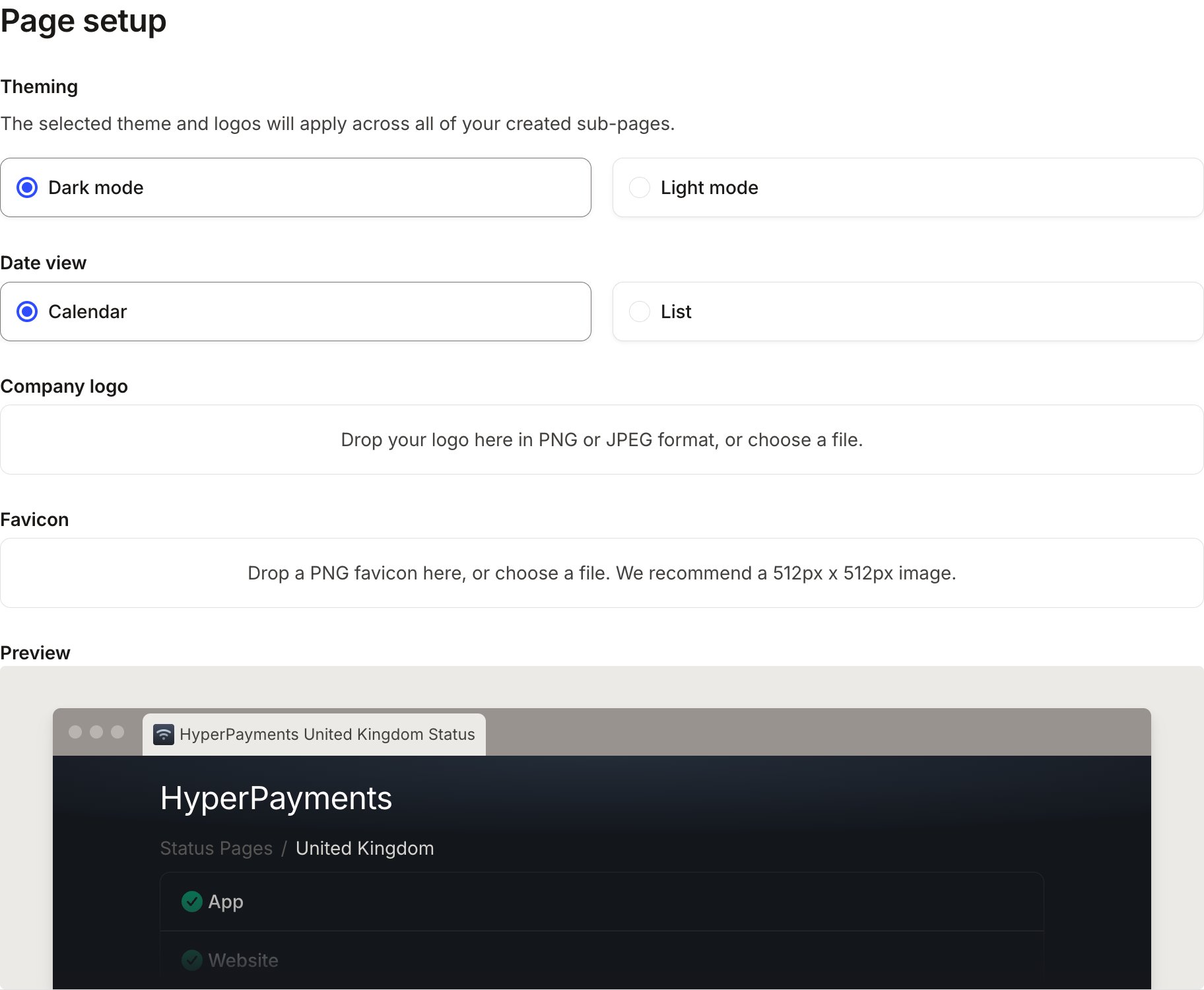
Choose a dark or light theme, pick whether dates show as a calendar or a list, and upload your logo and favicon. The theme and logos apply across every sub-page you create. Page setup step with Dark mode and Calendar selected, logo and favicon uploads, and a live preview
→ What’s next?

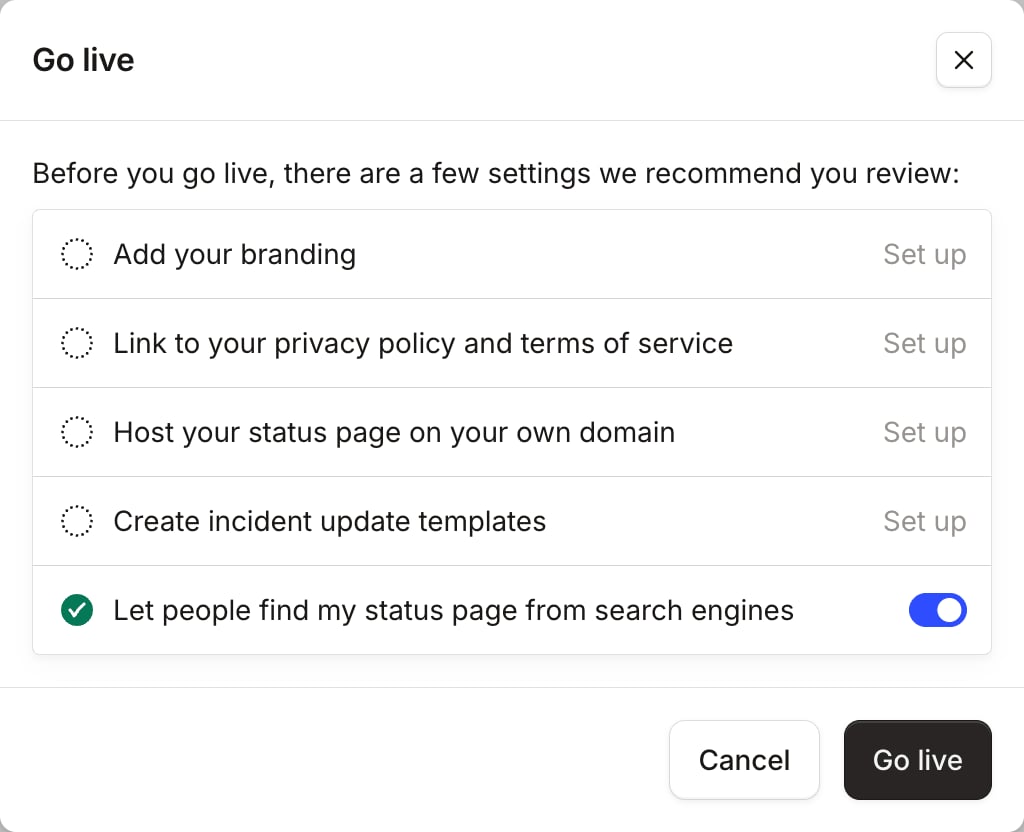
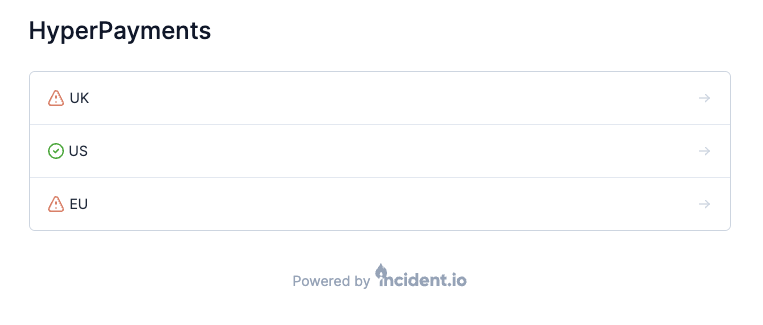
You’re now ready to Go live ! Banner reading "Review your status page configuration to complete setup" with a Go live button Depending on your configuration, there will be a number of items you’ll want to check off before going live. Feel free to do those following the in-app instructions. Go live modal listing branding, policy links, custom domain and template settings to review Now, the only thing left is to publish incidents. When you publish an incident (from the dashboard, or using /inc sp in Slack) and publish to your parent page, the incident will automatically appear on all sub-pages where your impacted components are visible. The HyperPayments parent page listing UK, US and EU sub-pages with their current statuses If you want to reconfigure anything, or add more sub-pages, head over to the Settings tab.