

- Reboot that server
- Send some comms to an affected customer
- Improve test coverage of a given codepath
- Do some investment to make a service more stable
How do I create actions?
There’s two ways you can do this:- React with the
:boom:emoji to any Slack message within the incident channel
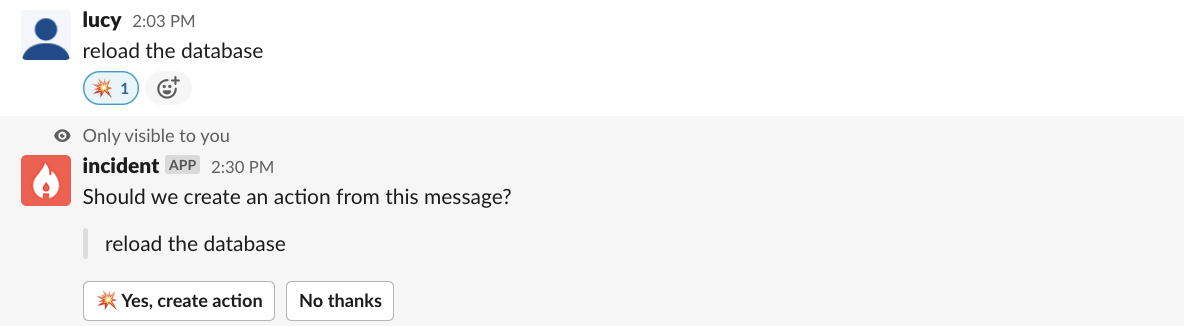

- Use the command /inc action, to create new actions and post any open actions within the channel
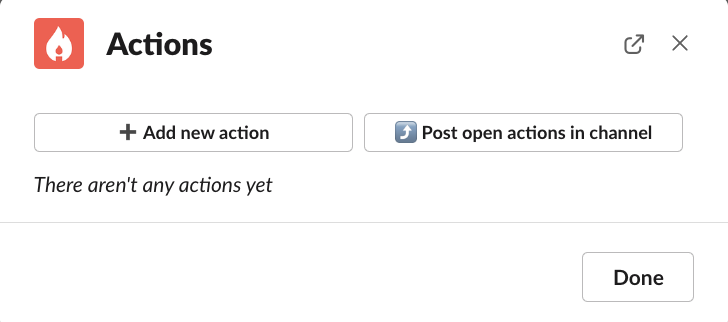
What can I do with actions?
After you’ve assigned actions to either yourself or someone else, you can:- Edit the action
- Mark it as completed
- Reassign it to yourself
- Unassign it from a team member

What if I want to do these actions after an incident?
If you want to complete these actions after an incident, they will become follow-ups and can even be exported to issue trackers such as Jira, Linear, and many more. When you go to mark the incident as resolved, any uncompleted actions will appear in the modal, and you’ll be able to convert these to follow-ups.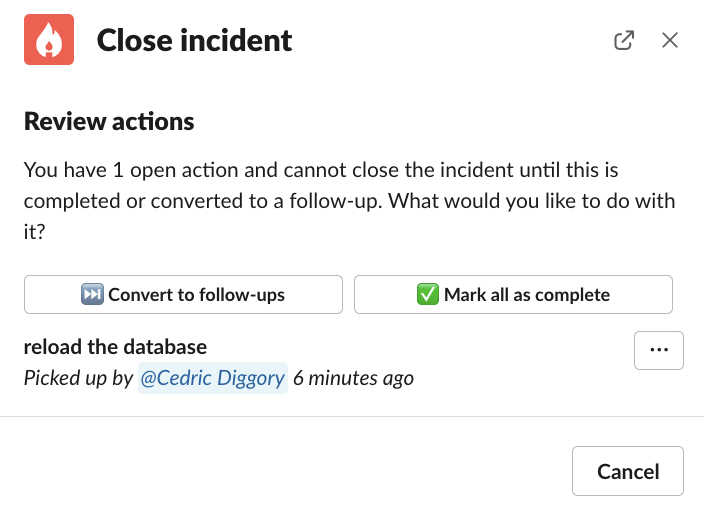
Any questions, we’d love to hear from you at hello@incident.io