Eliminate the hassle of manually exporting follow-ups by configuring them to export automatically to your issue tracker. This guide walks through the configuration process and demonstrates how to auto-export follow-ups to specific projects based on incident details, like custom field values.

Setup Integrations

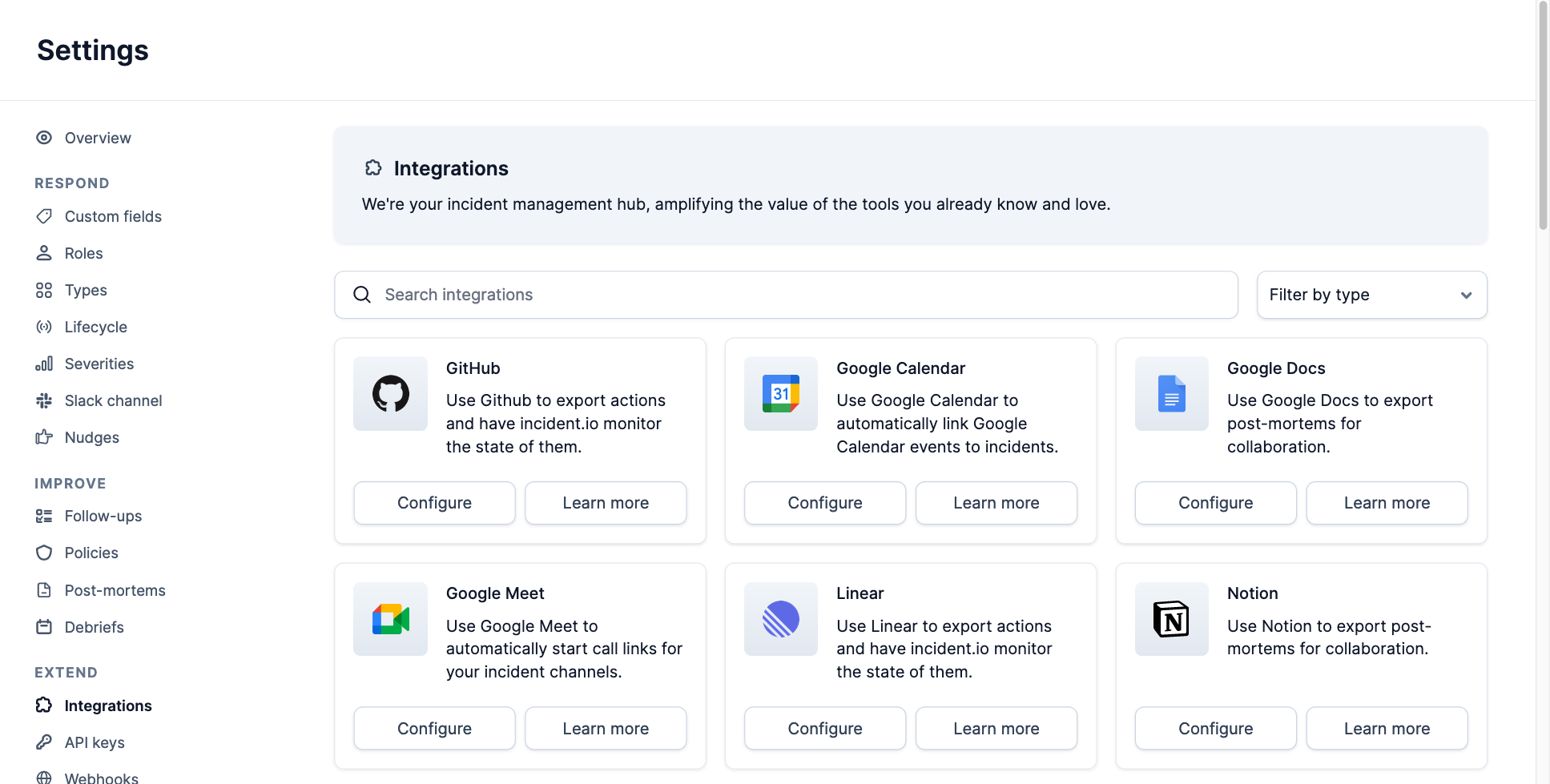
Before configuring the auto-export rules, ensure that you have the correct issue tracker providers installed as integrations. Navigate to Settings → Integrations, and install your issue tracker. Settings → Integrations page listing issue trackers such as GitHub and Linear, each with a Configure button
Configure Export Templates

When auto-exporting a follow-up, an export template will be used to set certain properties of the issue, for example:
  • The project the issue is assigned to
  • The user that owns the issue
  • Labels that are added to the issue
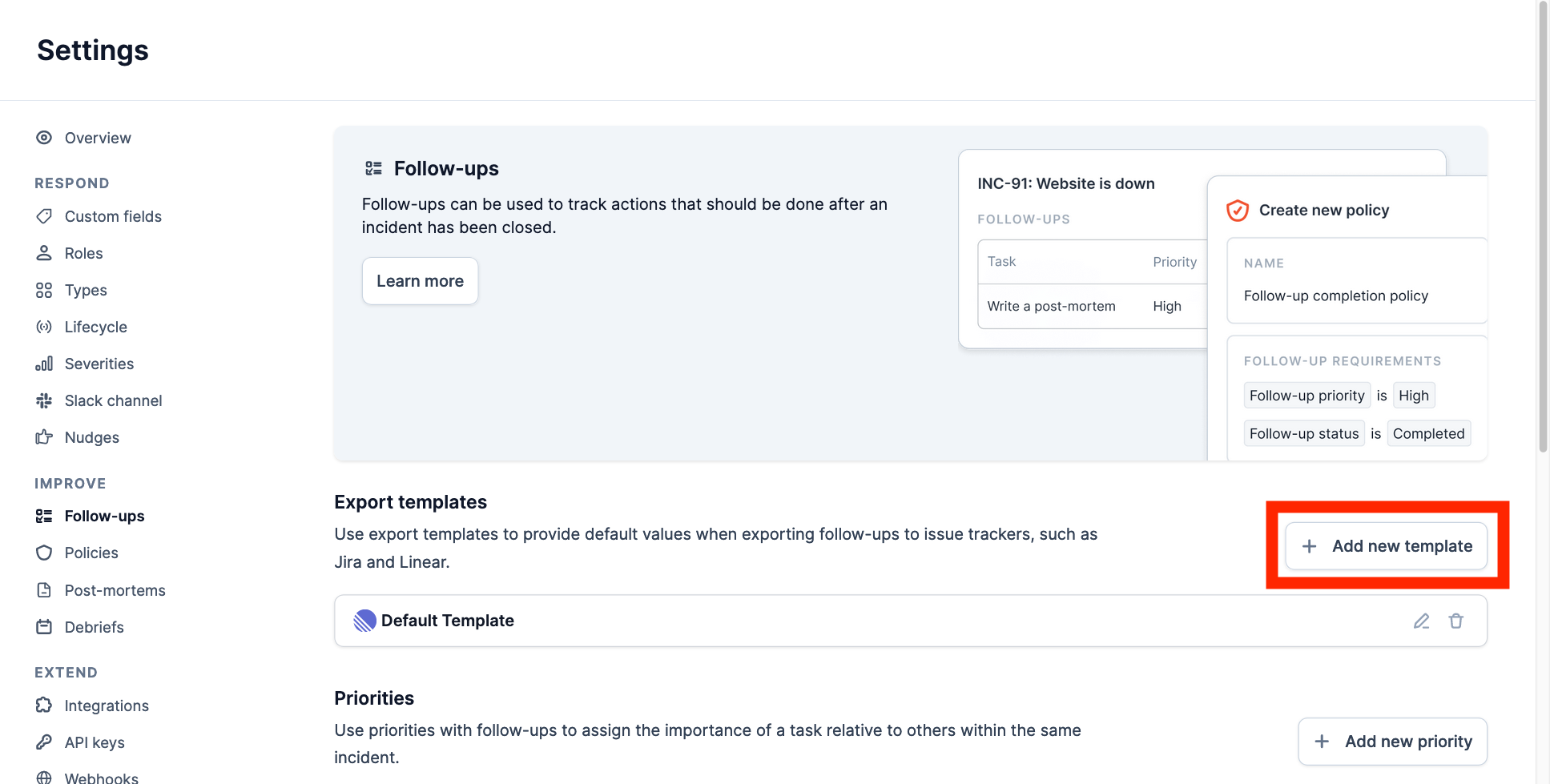
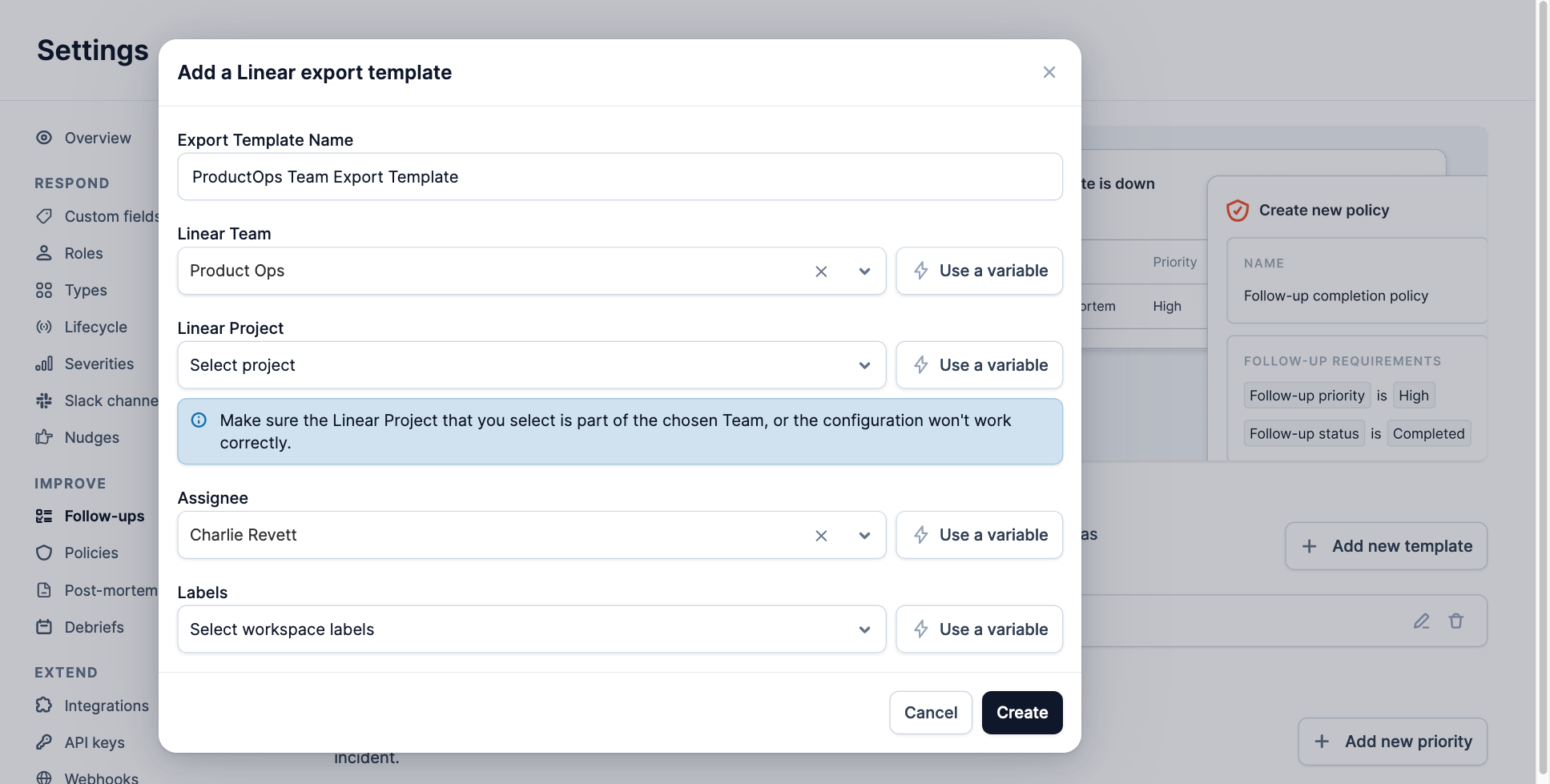
Navigate to Settings → Follow-ups, and add a new export template. Export templates section on Settings → Follow-ups, with Add new template highlighted Add a Linear export template dialog, with a Linear Team, Project, Assignee and Labels to set

Configure Conditions

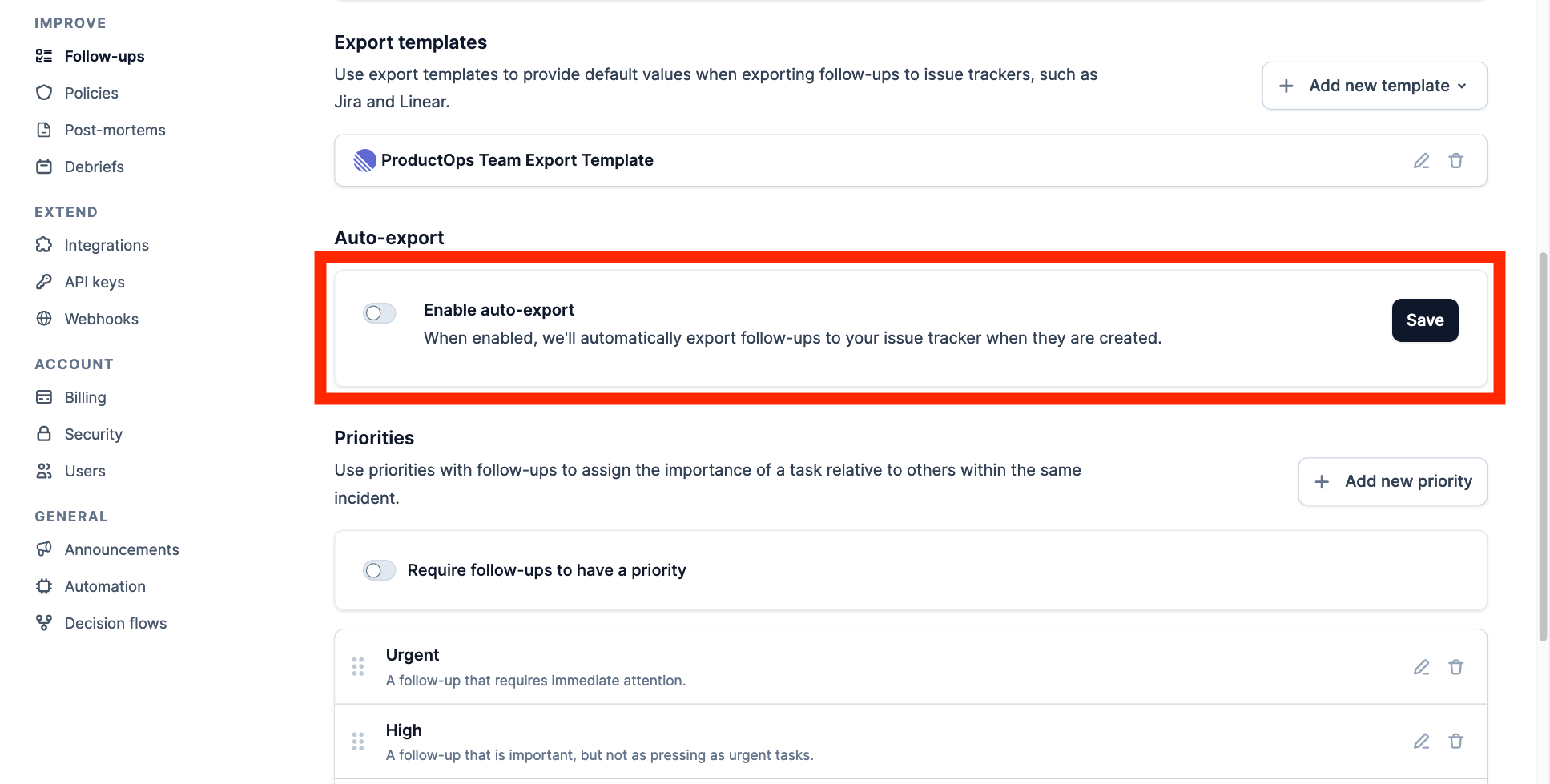
Navigate to Settings → Follow-ups, and enable auto-export. The Enable auto-export toggle, switched off, highlighted under Auto-export Out of the box, the export template you just created will be used to automatically export all follow-ups from all non-private incidents. Auto-export enabled with no conditions, so follow-ups from non-private incidents sync using the first template If you would like to configure when follow-ups should be automatically exported, and which export template should be used, then you will need to add a new condition. In the example below:
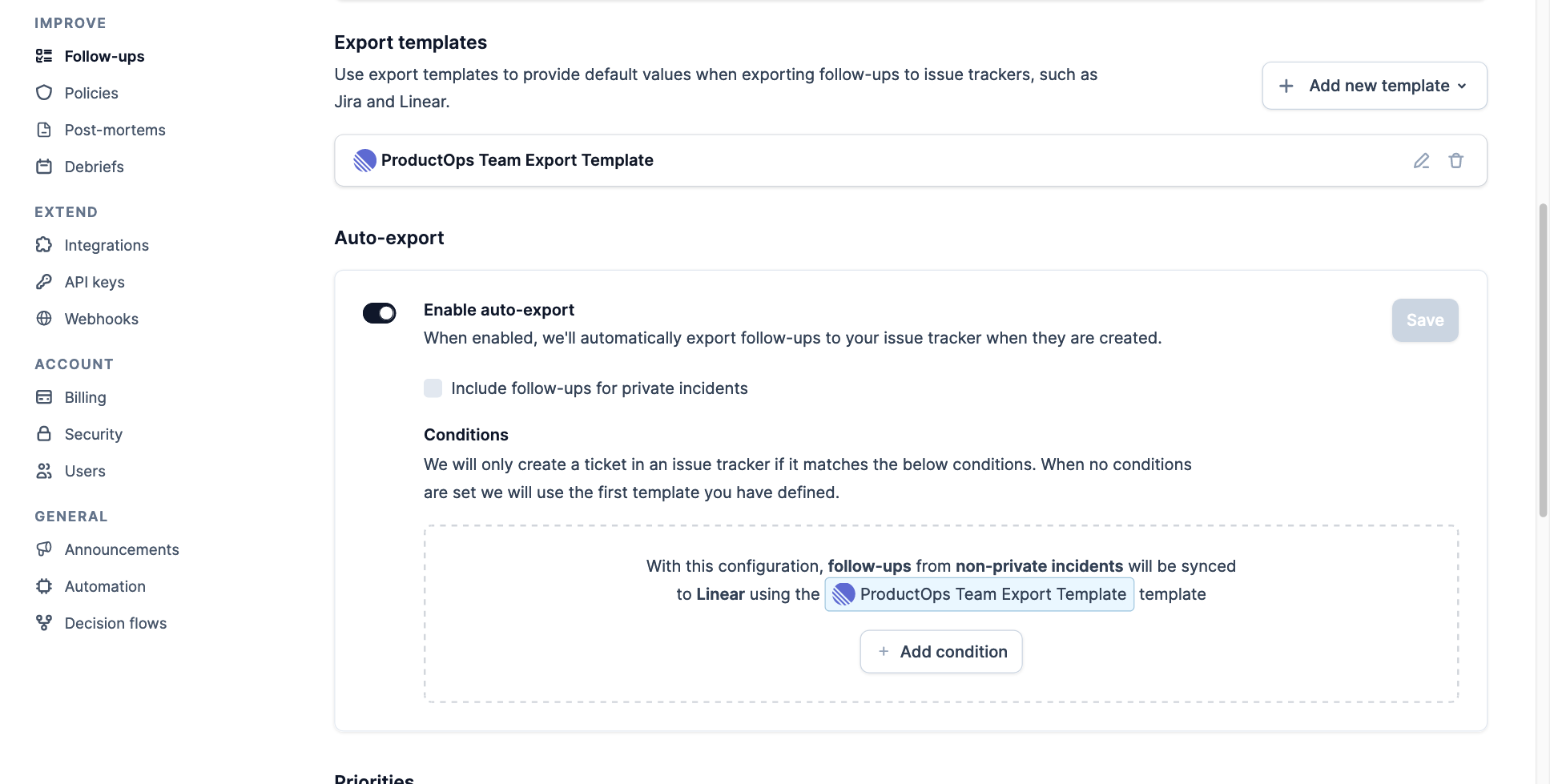
  • If the incident’s Affected Team custom field is set to ProductOps
  • Then automatically export the incident’s follow-ups using the ProductOps Team Export Template
  • If the custom field does not match, then do not automatically export follow-ups for the incident
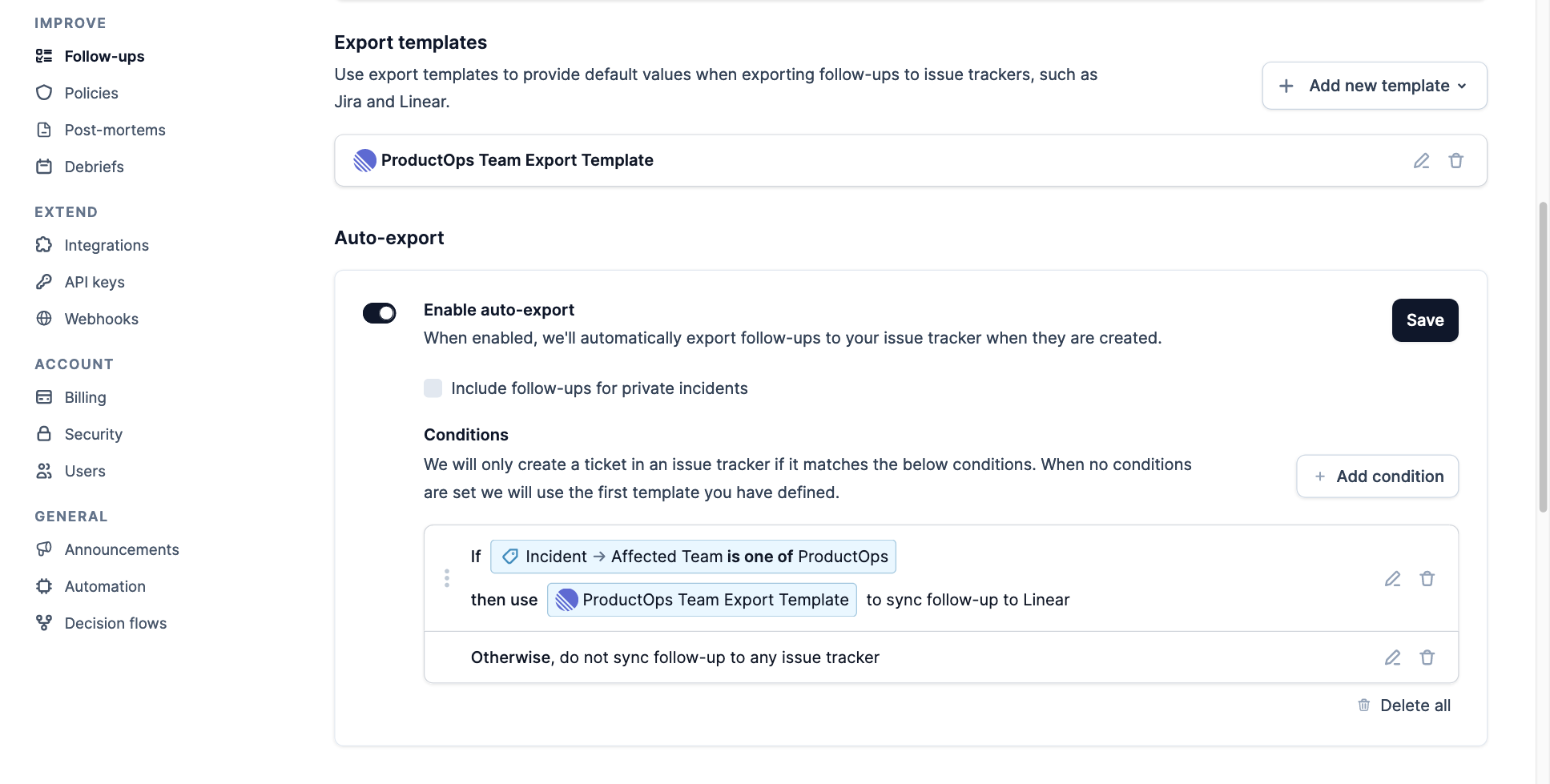
A condition matching Affected Team is one of ProductOps, then otherwise do not sync follow-up to any issue tracker

Fallback Behavior

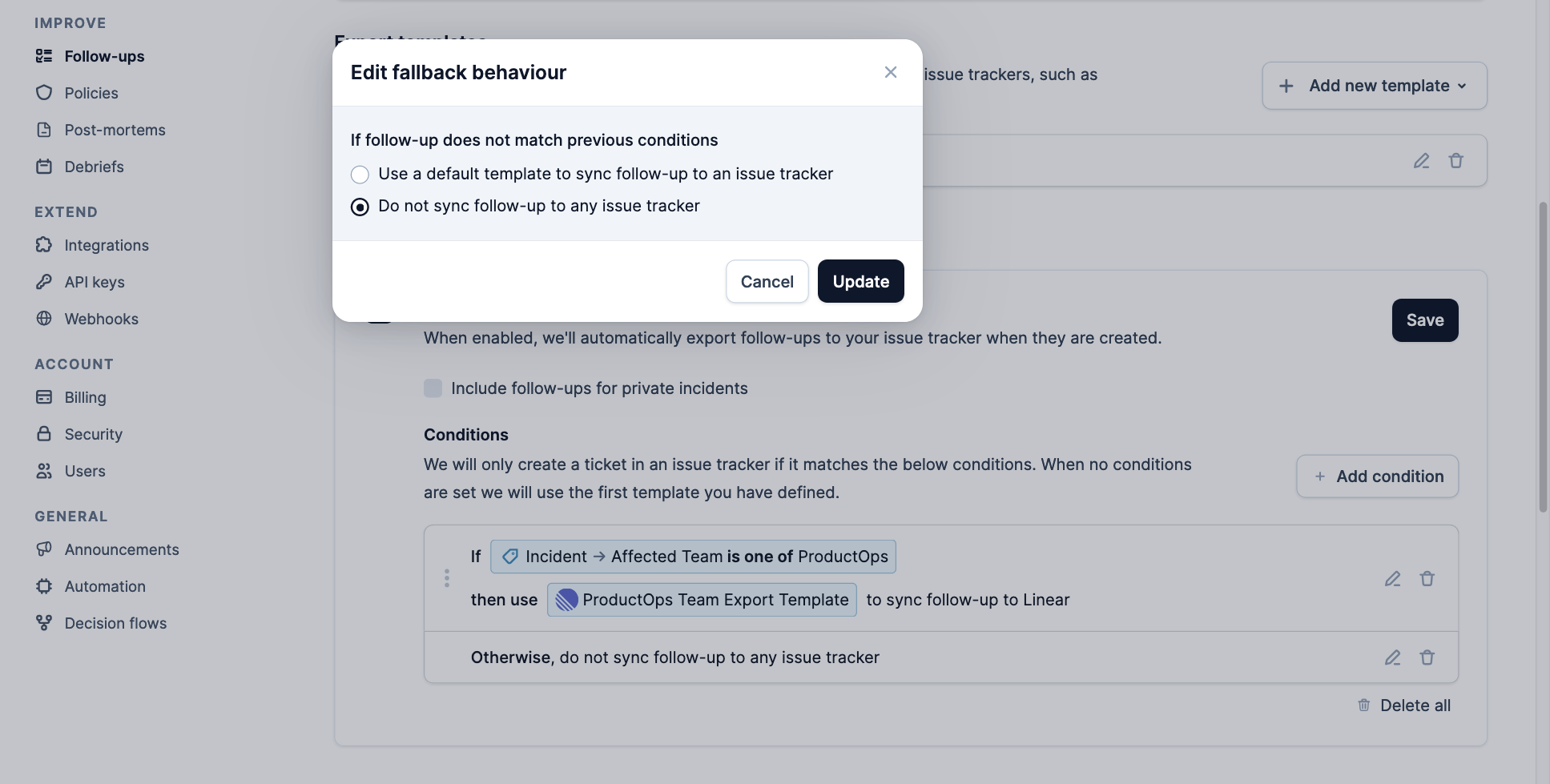
The example above has configured the fallback behavior to not automatically export follow-ups if conditions do not match, however you can instead select a default template to be used. This will ensure that follow-ups will always be automatically exported for each incident. Edit fallback behaviour dialog, with a choice between a default template and not syncing at all
Private Incidents

By default, auto-exporting of follow-ups is disabled for private incidents, however you can enable this on the Settings → Follow-ups page.