Follow-ups are a really important part of any incident management process, and with incident.io, you can export any remaining follow-ups to issue trackers, such as Jira Cloud. After you’ve integrated your incident.io account with your Jira Cloud account, navigate to follow-ups within the dashboard, here you’ll be able to see any outstanding and completed follow-ups from incidents you’ve had. You’ll also be able to see if anyone has been assigned the follow-up to complete. Even better, once a follow-up is exported, changes in Jira are synced back. Mark the ticket as done in Jira and the follow-ups dashboard in incident.io reflects it, along with the ticket’s title, description, assignee and labels. That also means an exported follow-up is edited in Jira rather than here. See issue tracker sync for the full field-by-field breakdown.

Exporting single follow-ups

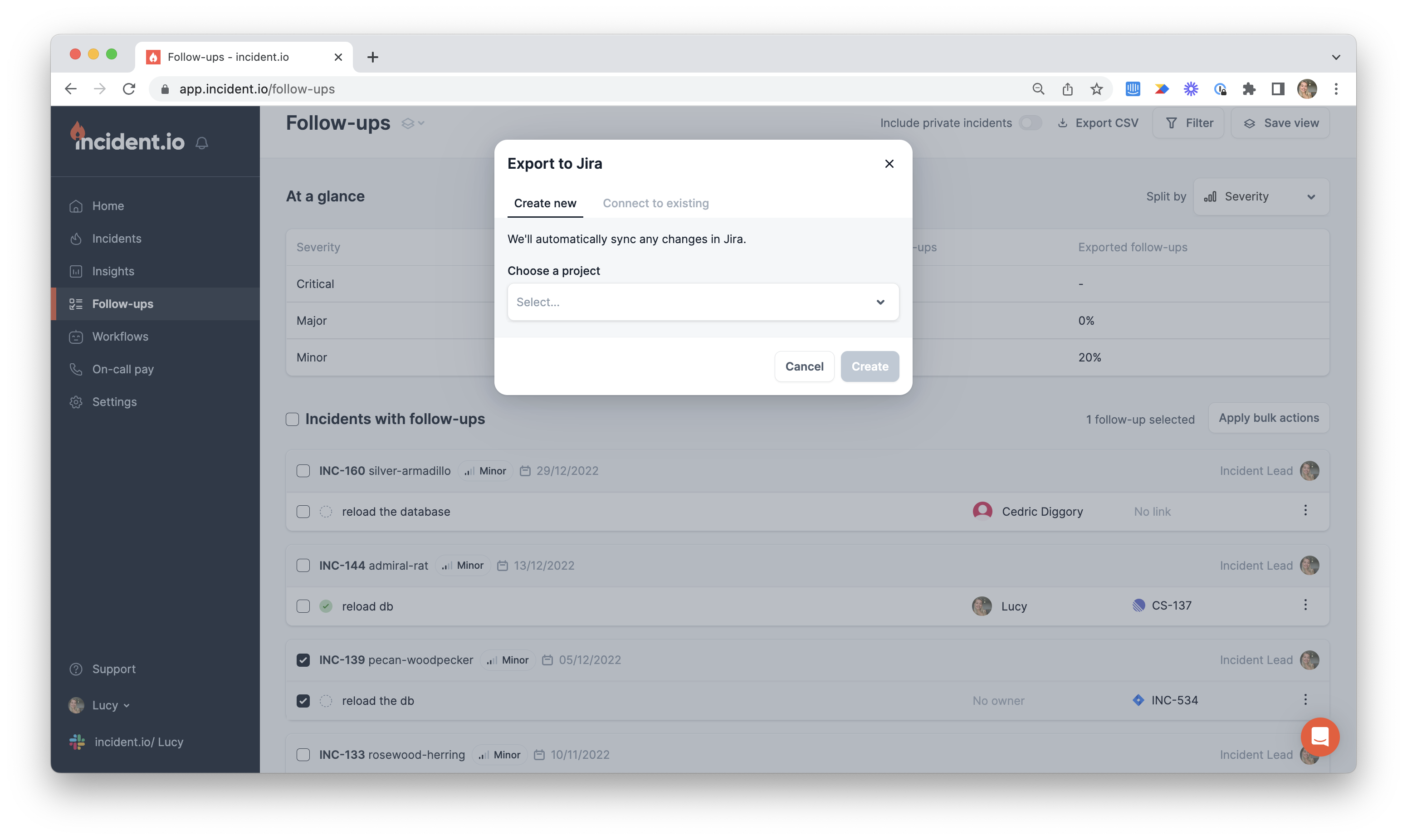
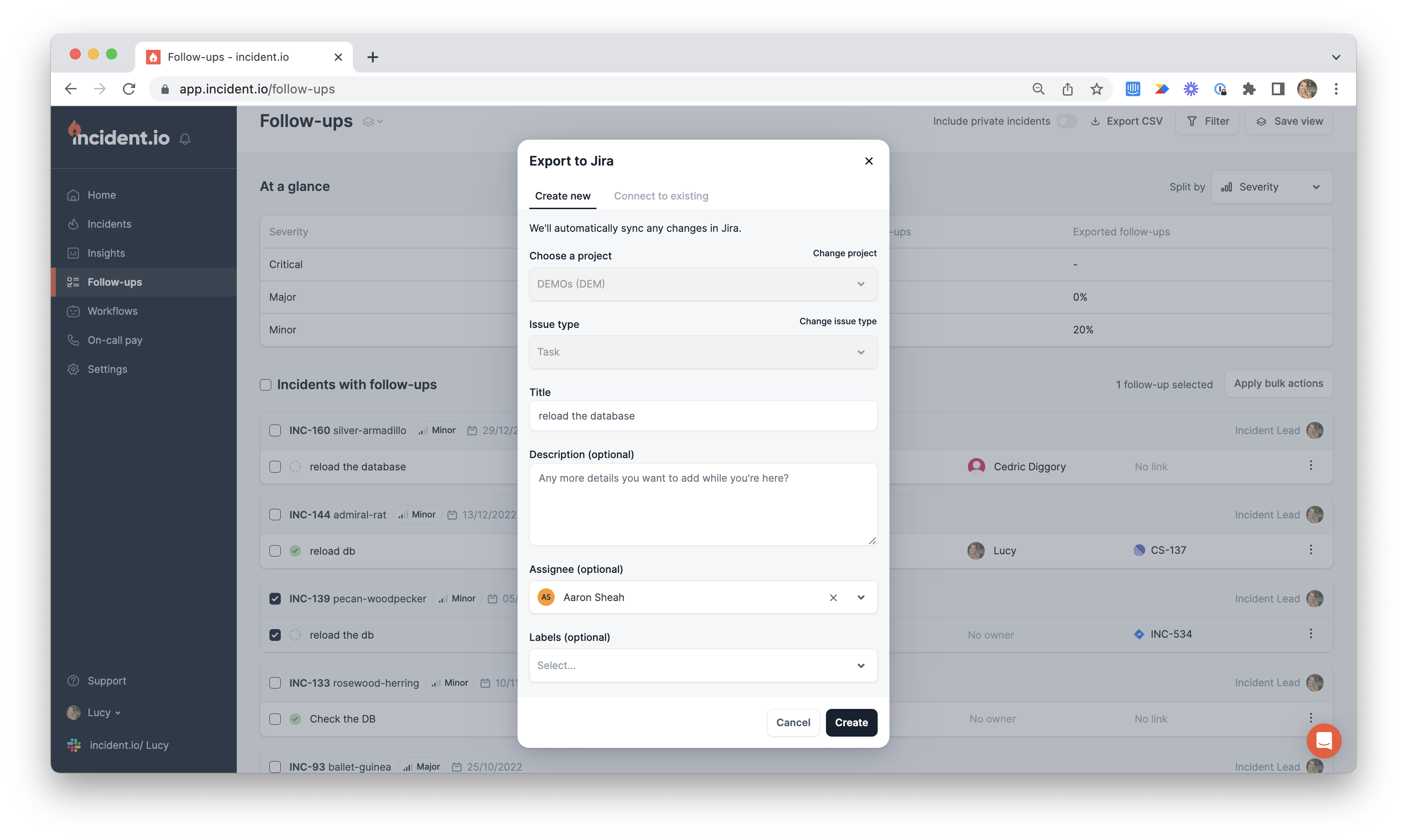
With your follow-ups dashboard, you can export single follow-ups as new tickets or connect them to existing tickets and choose which project they are exported to. The Jira: Create or link to existing issue drawer on the Create new tab, with a Project picker If you’re creating a new ticket, you can assign it to yourself, or someone else, as well as giving them a description. The Create new tab filled in with Issue Type, Summary, Description and an Assignee
Connecting follow-ups to existing Jira tickets

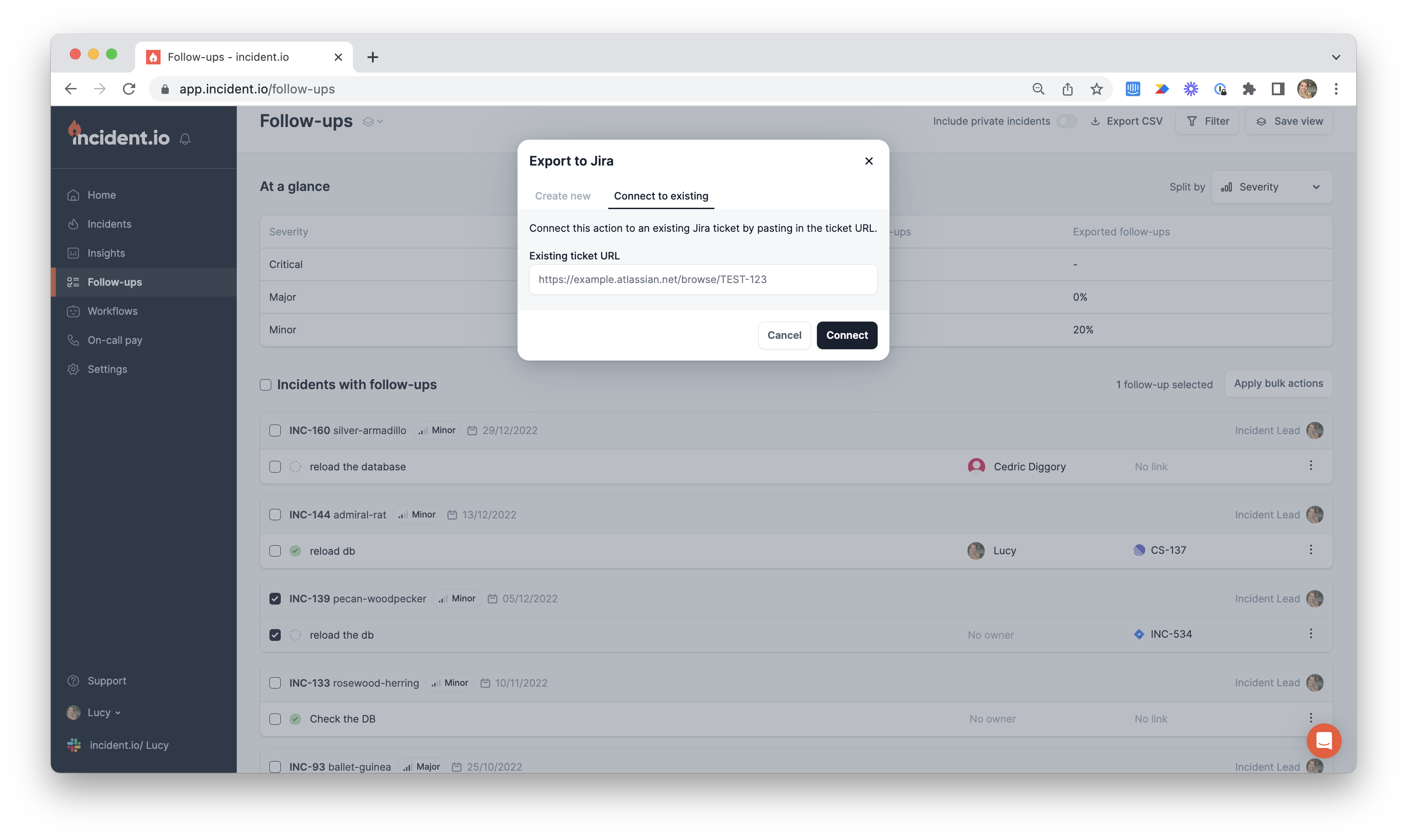
Instead of creating a new ticket, you can connect a follow-up to an existing ticket, helping folks close the loop. The Connect to existing tab, with a field for pasting an existing Jira ticket URL This can also be done by simply pasting a link to the Jira ticket in the incident’s slack channel. Note: You can only link existing Jira issues that don’t have a status of Done
Setting “paragraph” custom fields in Jira when exporting follow-ups

  • If you’re manually exporting follow-ups, you’ll be prompted to enter a value for the “paragraph” field during the export process.
  • For automatic follow-up exports, you can configure the field to populate based on incident properties when you set up your export template.